Showing posts with label American Indian Stories. Show all posts

Thursday, March 22, 2012

Story of Alpharetta Boice - Adopted Indian Baby

Ute Mother and Papoose 1893

On October 26, 1968, Delila Boice Asay related the following Indian and Pioneer stories to Sharon G. Blackburn.  They have been compiled and typed as near to the exact words as possible that Grandma used for the enjoyment of those who will read them.  All of the stories are written about the actual happenings of relatives and friends of Grandma Asay.

This is a story about Grandma Delila Asay's grandparents, Mary Ann Barzee Boice, and John Boice.  It took place at Spanish Fork, Utah, in 1854, the year that "Uncle Bert" was born.

Mary Ann Barzee Boice
Mary Ann Barzee Boice and John Boice were called to Spanish Fork, Utah, by President Brigham Young to start a settlement there.

This monument is all that remains of the fort located in Palmyra Utah, The fort John and Mary Ann were called to help build.  It is located at the corner of a corral on a farm.  When Indian trouble increased, these pioneers followed the admonition of President Brigham Young and moved to the safety of the larger fort in Spanish Fork.  This marker is located west of Spanish Fork, not far from Utah Lake.  Stephen Markham was Bishop, and he was also John Boice's son-in-law.  He married his daughter Martha Jane, daughter of John Boice and Jane Herns


Because Grandma Barzee spoke the Indian language she could communicate better and be friends to the Indians.  She had been asked to be an interpreter between the pioneers and Indians.  One day in 1854 a young Indian buck came and said to Grandma Barzee, "My squaw died and I have no one to help me.  You take care of my baby?"  She said that she would have to talk to her husband about this and instructed him to come back at noon for his answer.  Since the Indians often times pulled tricks she was afraid maybe this was a trick.  When he left she went straight to her husband and told him the incident.  He told her to go see Bishop Markham and "We will do just as he says".  The bishop told her to take the baby and she told him that she hesitated to because she already had 5 children and the one baby "Uncle Bert" was just about a month older than this Indian baby.  The bishop said "Take the baby and raise it and someday you will be blessed for doing so."

When the sun was high in the sky at noon, the Indian came back with the baby to hear the answer.  Grandma told him that she would take the baby and for him to go and bring all that his squaw had prepared for the baby.  Of course this was a meager amount of things.  She prepared some warm water on the stove and bathed the baby and scrubbed it clean.  She also cleaned the few clothes that it had.  The family simply fell in love with it.  Grandma nursed both babies and raised them as twins.  The Indian father made regular trips to check on his baby.

After awhile both babies fell ill.  Uncle Bert seemed to respond to the medicine that she was giving them but the baby girl got worse each day.  Finally the baby Indian died and the father said that her mother wanted her to be with her.  The church prepared a funeral for the baby just as though it was one of their own, and they invited all the Indians to come to the funeral.  So many Indians came that there was an overflow crowd.  After the funeral the father disappeared and no one knew where he had gone to.

John Boice

After awhile the Boice family was called by President Brigham Young to go up to Camos, Utah, to make a new settlement.  This is just out from Heber City.  Two families prepared to go to the new settlement.  When they stopped for the night they put the animals to graze.  Next morning they hitched up to leave and found themselves surrounded by Indians.  John told the Chief that they were just friends and didn't come to harm them but the Chief said, "No, you come and fish all the fish from the streams and use up all the Indian food."  John turned to Mary Ann to tell them that they were friends.  When it looked like all was useless one Indian broke from the crowd of Indians and rode right up before the Chief.  He said, "Chief, these people are friends.  They took my baby to raise when my squaw died.  Please let them go free."  He even got on his knees and begged the chief.  The chief decided to let them go but first they had to form a treaty and give the Indians a sack of flour and a beef.

After the Indians rode off, John got on his horse and rode to President Brigham Young in Salt Lake and told him what had happened.  Brigham Young instructed them to come back to Spanish Fork, that it was not yet time for a settlement there and that they didn't want any trouble with the Indians.

*************************

Once while Grandma Asay was in Mesa, Arizona, a lady asked her if she knew alot about Wyoming history.  When Grandma said that she didn't know so awfully much this lady explained that on September 26, 1886, thirteen men from a freight outfit were taking supplies to Salt Lake City.  They camped at the head of Antelope Creek on South Pass.  A freak Wyoming storm came up and during the night all thirteen men were frozen to death and so were some of the oxen.  All the men were burried in one grave.  One of the thirteen men was this lady's grandfather.


________________________________
Source:  History 27a 
Grandmother Asay's Book of Remembernce

Sunday, May 22, 2011

Story of Bill and Carl

Five-Springs Falls
Big Horn Mountains Wyoming

In 1936 money was short for everyone nationwide.  Family vacations were not in the plans for many.  However, my Grandparents decided to call their family together for an over-night on the Big Horn Mountain at the Five Springs Saw Mill that held so many dear memories from their early married life.

Although I was only 5 years old the events of this family 'mini vacation' in the mountains will always hold a special place in my reservoir of memories. 

Flowers on the Big Horns
My cousins and I picked billiant mountain flowers; we waded in icy mountain streams and stood under the sparkling waterfall streams and stood under the sparkling waterfall as it cascaded down over jagged rocks.
Five-Springs Falls
Dinner was cooked over an old fashioned camp-fire; the mountain air had given us huge appetities.  Corn on the cob and hot dogs had never tasted so good. 

We sat around the dying fire roasting marshmellows and singing all our favorite songs.  Then Grandma told us the story of "Bill and Carl."  It was the first time I'd heard it, and I will never forget that story as long as I live - perhaps it was the location where it was told - or the warm glow of the families' closeness that made it so memorable:

Bill and Carl
(as told by Grandma Asay)

The story I'm about to tell you is true.  It happened to a family in Idaho when my mother was a young girl.

A long time ago the little boys had to learn to work just like men.  They were taught to plow the fields, chop the wood, and drive the wagons just like their fathers.  Everyone worked so they could survive.

Bill and Carl, ages 8 and 12, were to go with a group of men and boys to the canyon to get wood for winter and logs for building houses.  Their mother prepared a nice lunch box for them and their father helped hitch up the wagon.  The boys gathered their bedding and were soon ready for the journey.

They were to meet the others at a certain place in the canyon, but as the boys reached the crossroads they weren't sure which fork to take.  Finally they gook the one that appeared to have the freshest tracks.  They headed their oxen up this canyon and rod all day going up and up.

When evening came the oxen were tired and they hadn't found anybody; they were still all alone.  So they decided to make camp and wait for the others to catch up.  The oxen were unhooked and fed.  The boys then built a small fire, spread out their bedrolls and ate their lunches.

Soon Bill said, "Carl, are you scared?"  Carl answered, "why no, of course not."  Bill said, "Do you think Ma and Pa will pray for us tonight?"  Carl convinced Bill that they would.  More times passed.  Bill said, "Carl, do you think Heavenly Father would hear us if we prayed to him?"  Carl assured him that He would and they knelt together by their dying fire praying to Heavenly Father that they would get home alright.  They thanked Him for the blessings that they had come that far safely.  They then prayed that the other group would soon catch up with them.

Bill went right to sleep, but Carl lay there wide awake.  Suddenly a loud war hoop was heard, and two huge Indians, jumped out from behind the pine trees.  They quickly tied the boys' hands, picked up their guns and other equipment - and made them further and further up into the mountains.  Finally when they couldn't go another step, camp was made.  Though they were terrified Bill and Carl knew they must act brave. 

During the night the boys were able to free themselves as the Indians slept.  They quietly found their guns, and twisted the oxens' tails until they got up and quickly headed right back the way they came. 

After while they stopped and Carl climbed to a look-out point ... Bill was to shoot if the Indians showed up.  As Carl looked down into the valley below, he heard a gunshot.  Could it be the Indians?  He hurried back to find Bill clutching his gun, and there were drops of blood on the rocks.  Bill proudly told his big brother he had scared the Indians away.

Horses were coming in the distance now, and the boys were so afraid it was more Indians, but as they got closer they recognized their father at the head!  He soon had his boys in his arms, and what tears of graitude were shed.

A few years later the pioneers invited the Indians to their 24th of July Celebration.  As Bill and Carl stood by their father, an Indian walked up and began telling them how brave they were.  But it wasn't until he showed them the gash on his face where he had been nicked by Bill's bullet that they finally understood.  The Indian explained how they admired the 2 young boys for their bravery on the mountain that day years ago.

********************
After Grandma's story we knelt in family prayer and slept out under the stars on old mattresses covered with heavy quilts.  How safe I felt with my parents on either side and all my strong uncles and grandparents to protect me from whatever unknowns the Big Horns had to offer ..... Indians and bears were my big concern!  But it was the elements that finally zapped us - a midnight shower complete with thunder and lightning sent us scurrying for shelter in cars, under trucks, and trees.  To me this made the whole thing an exciting adventure to be brought out and savored from my treasure chest of childhood memories in the years to come.
__________________________________
Source: "Till We Meet Again" by Joy Marostica

Saturday, May 21, 2011

Two Indian Stories

Martin Calvin Boyce

Grandma Asay told this story to Kenny Blackburn, age 5, October 26, 1969. 
No changes have been made, type as originally written:

When my father was just a young boy possibly 9 years old the cattle from the fort had been driven down on the willow bottom and there was grass there that they could find plenty to eat and grandfather had a lovely big cow and she had been sent down to remain there until she found her little calf.  My father was just a little boy and grandfather said, "Calvin, go get on the workhorse and go down and see if you can find her.  If you can and she hasn't found her little calf just leave her there and come on back without her."   So father went out and looked at the workhorse and then he looked at the little race mare.  He had prayed to Heavenly father to guide him to do the right thing so that he would be sure to get back home.  So he looked at the race mare and put the bridle on her and fixed her up and he got on her back and away he went to find that cow.  He went down on the willow bottom and the trail wound around and around the willows.  He just kept going and going.  Finally he found the great big lovely cow and she hadn't found her little calf yet so he turned around and started back.  He hadn't gone far when his attention was drawn behind him.  He looked and there were 5 big Indian men on horses whipping those horses trying to catch father.  Father just kicked the little mare in the ribs and loosened the reins and let her go.  She took off just like that.  He had presence of mind to know that he didn't dare to let her run too long or she would loose her wind and he had about 5 miles to go.  So when he seen he was ahead of them far enough he would pull the reins in and slow her down.  And that is what he did.  He would hold her down until he saw that they were gaining on him and then he would let her go.  He would run real fast for a little ways and the he would hold her down again.  The Indians came just as fast as they could.  As they got in sight of the fort the Indians could see that they could not catch him and every one fired a shot at him.  He could hear the bullets whizzing past him on each side of his head, but not a one hit him.  They swung the big gate open and my daddy rode through into the fort and his life was spared.  It was only a few days before that that the Indians caught two of the herdsboys, about the age of 10 and 14, down on the willow bottom and the Indians took one of the boys and unjointed every joint in his body.  They took the other boy and skinned him just like they would an elk or something.  And that was what frightened my daddy so, but daddy got home alright, but the two blessed boys died.

Publisher's Note:  Based on the approximate age of Martin Calvin, this incident must have occured either at Fort Palmyria or the fort in Spanish Fork, Utah.   Families from the Palmyria Fort were encouraged to move into the Fort at Spanish Fork in 1856 when hostilities between the pioneers and Indians increased with the Walker or Walkara Wars of 1853-1856 .  Since it was so far for Martin Calvin to travel to find the cow, they must have been in the Spanish Fork fort.

Chief Walkara

-------------------------

This story is about Christianna Dolbell Riding, daughter of Christopher Lister Riding and Lisa, when she was 18 months old. It happened March 25, 1859, in Santa Clair, Utah. 

Christianna Dolbell Riding


Little Christianna had been ill and as it was rather hot in the house, her father laid her on a quilt under the boughrey. The boughrey was a frame porch affair covered with boughs or vines which was cooler than in the house.

Her parents checked her every so often to make sure that she was alright; however, this one time they checked just a little too late and their baby was gone! Christopher ran outside and looked all around. In the distance he could see two figures galloping on horseback just going up over a hill. It appeared that one was carrying something cradled in his arms. He quickly sounded the alarm and soon a dozen men answered the alarm and gave chase. They chased the two for about 8 miles before finally catching up with them and baby Christianna. They were just outside the Indian camp and had they gotten to camp they probably never would have seen the baby again.

The men asked why the Indians had stolen the baby and they answered "To scare white squaw." The men were so angry that they whipped the two Indian men good and told them to let that be a lesson. If it ever happened again they would kill them. The men returned home safely with little Christianna. When they returned to the house they discovered a new baby brother waiting to greet Christianna and her father Christopher. Her mother said this was the happiest day of her life.

They later discovered that that same day a little Heap's girl had been stolen and they never found her. It was a custom for the Indians to steal white baby girls and raise them as Indians. They would later become wives for the chief's sons.


Tuesday, October 26, 2010

Holloway Massacre


Nancy Bush Holloway circa 1858
As recorded in "Book of Crossing the Plains, Days of '57' by William Audley Maxwell

Note:  This is a true story of an Indian Massacre on the Humboldt River 30 miles East of Winnemucca,Nevada, August 14, 1857. Jeremiah Bush is my daughter-in-law's gg-grandfather.  This is not a story Grandmother Asay told, but is a true Pioneer Story and seemed to fit best here.

CHAPTER V.

THE HOLLOWAY MASSACRE.

It was decided that while in this region we would, whenever possible, make our camp some distance from the river, in order that the stock might be prevented from drinking the dangerous river water, also for the reason that the clumps of willows by the stream could be used as a cover by Indians bent on mischief: and they, we now believed, were watching for a favorable opportunity to surprise us.

It transpired that the Holloway party neglected this precaution, at least on one occasion, sometime after passing the head of the Humboldt River. Their train was next behind ours when, on the evening of August 13th, after rounding up their stock for the night, a short distance from the wagons, they stopped near the willows by the river and made what proved to be their last camp.

Behind them, but not within sight, were several emigrant camps at points varying from a few rods to half a mile apart.

The Holloway party retired as usual for the night; Mr. and Mrs. Holloway and their child, a girl of two years, in a small tent near the wagons; Jerry Bush, Mrs. Holloway's brother, and one of the hired men, Joe Blevens, in their blankets on the ground; while Bird Lawles, the other hired man, being ill with a fever, slept in a wagon.

There were others with this party that night; Mr. and Mrs. Callum, Mr. Hattlebaugh, and a man whose name is now unknown. These four had been traveling near the Holloway party, and joined it for camping on that occasion.

The following morning Mr. Holloway was the first to arise. While making the camp-fire, he called to the others to get up, saying cheerfully:

"Well, we've got through one more night without a call from the Redskins."

"Bang, bang," rang out a volley of rifle shots, fired from the willows along the river, less than a hundred yards away.

Mr. Holloway fell, fatally shot, and died without a word or a struggle. As other members of the emigrant party sprang to their feet and came within view of the assailants, the firing continued, killing Joe Blevens, Mrs. Callum, and the man whose name is not recalled; while Bird Lawles, being discovered on his sick bed in a wagon, was instantly put to death.

Jerimiah "Jerry" Bush
 Meanwhile Jerry Bush grasped his rifle and joined battle against the assassins. Thus far the savages remained hidden in the bushes, and Jerry's shots were fired merely at places where he saw the tall weeds and willows shaken by the motions of the Indians, therefore he has never known whether his bullets struck one of the enemy.

While thus fighting alone, for his life and that of his people, he received a gunshot in his side and fell. Knowing that he was unable to continue the fight, and, though doubting that he could rise, he endeavored to shield himself from the bullets and arrows of the Indian band. He succeeded in dragging himself to the river bank, when, seizing a willow branch, he lowered himself to the foot of the steep cliff, some ten feet, reaching the water's edge. He then attempted to swim to the opposite shore. The effort caused him to lose his gun, in deep water. Owing to weakness due to his wound, he was unable to cross the stream.

Jerry Bush's parting view of the camp had revealed the apparent destruction of his entire party, except himself. Observing the body of at least one woman, among the victims on the ground, he believed that his sister also had been slain.

 But Mrs. Holloway and the little girl were still in the tent, for the time unhurt, and just awakened from their morning slumber. Having realized that the camp was being attacked, Mrs. Holloway emerged from the tent to find no living member of her party in sight, other than herself and her child. For a moment she was partially shielded by the wagons. The first object that drew her attention was her husband's form, lying still in death, near the fire he had just kindled. Next beyond was the dead body of Blevens, and a little farther away were the remains of the others who had been slain. Her brother she did not see, but supposed he had met the same fate as the others whom she saw on the ground. Jerry was an experienced hunter; she knew that he always owned a fine gun, and had full confidence that, if he were alive and not disabled, he would defend his people to the last.

"With hand upraised, in supplication, yielded to the impulse to flee" She saw some of the Indians coming from their ambush by the river. They approached for a time with caution, looking furtively about, as if to be sure there was no man left to defend the camp. As they drew nearer Mrs. Holloway realized that she and her child were facing an awful fate—death or captivity. On came the savages, now more boldly, and in greater numbers.

Holloway Massacre on Humboldt River Sketch
 The terrified woman, clothed only in her night robe, barefooted; not knowing whether to take flight or stand and plead for mercy; with the child on one arm, one hand raised in supplication, yielded finally to the impulse to flee. As she started the attacking band resumed firing; she was struck, by arrows and at least one bullet, and dropped headlong to the ground.

Though conscious, she remained motionless, in the hope that, by feigning death she might escape further wounds and torture. But the Indians came, and taking the arrows from her body, punctured her flesh with the jagged instruments, as a test whether physical sensation would disclose a sign of life remaining. She lay with eyes closed; not a muscle twitched nor a finger moved, while those demons proceeded, in no delicate manner, to cut the skin around the head at the edge of the hair, then tear the scalp from the skull, leaving the bare and bleeding head on the ground.

Horrible as all this was, it did not prove to be the last nor the most revolting exhibition of wanton lust for blood.

The little girl, who it is hoped had been rendered insensible at sight of the cruelties perpetrated upon her mother, was taken by the feet and her brains dashed out on the wheels of a wagon. To this last act in the fiendish drama there was probably no witness other than the actors in it; but the child's body, mangled too terribly for description, and the bloody marks on the wagon, gave evidence so convincing that there could not be a moment's doubt of what had occurred.

The marauders now began a general looting of the wagons. Some of their number were rounding up the stock, preparing to drive the cattle away, when the trains of emigrants next in the rear appeared, less than half a mile distant. This caused the Indian band to retreat. They crossed the river, and then placing themselves behind the willows, hurried away, making their escape into the mountain fastnesses. Owing to their precipitous departure, much of the plunder they were preparing to take was left behind them. Among the articles thus dropped by them was the scalp of Mrs. Holloway, and the rescuing party found and took possession of it.

Those emigrants who first came upon the scene found Mrs. Holloway apparently dead; but, on taking her up, they saw that she was alive. Though returning to semi-consciousness some time later, her condition was such that she was unable to tell the story then; but there were evidences showing plainer than words could have told of the awful events of that morning, which had converted the quiet camp of this happy, hopeful company into a scene of death and destruction.

Before noon a large number of people of the great emigrant procession had arrived. They united in giving to the dead the best interment that the circumstances permitted. Then the broken and scattered effects of the Holloway company were gathered up, and the now mournful trains took position in the line of pilgrimage and again moved forward towards the Pacific.

Mr. Fennell, aided by Captain Rountree's company and others, attempted to save such of the Holloway property as had not been carried off or destroyed. They were successful in recovering about one hundred of the one hundred and fifty head of stock which the Indians had endeavored to drive away. Two mules that were being led off by ropes broke away from the savage band and returned, but the emigrants did not recover any of the stolen horses.

Jerry Bush found his way back to the scene. His injury, though apparently of a dangerous character, did not delay the relief parties more than a day after the attack, and the wound healed within a few weeks. It was reported that Callum and Hattlebaugh had escaped, but their further whereabouts was not known.

Captain Rountree took charge of Mrs. Holloway and her brother and brought them, with such of their stock and other belongings as remained, to The Meadows, on the Feather River. After partially recuperating there, an uncle, Mr. Perry Durban, came to their aid, and they were taken to Suisun. After full recovery from his wound, Jerry Bush located in Ukiah, and resided there some years. He still survives, now a resident of Hulett, Wyoming, at the ripe age of eighty years.

The slaughter of the Holloway party occurred at a point on the Humboldt River some thirty miles east of where Winnemucca is located, a few miles west of Battle Mountain. This becomes apparent by careful estimates of distance traveled per day, rather than by landmarks noted at the time, there being no settlements there, nor elsewhere along the route, at that time.

Jerry Bush, 1914 It was perhaps a year later when I went to a camp-meeting one Sunday, at Mark West Creek, in Sonoma County, California. The people attending a service were in a small opening among trees. Standing back of those who were seated, I saw among them a woman whose profile seemed familiar, and later I recognized her as Mrs. Holloway.

My interest in her career, due to her extraordinary part in the Indian massacre on the plains, was heightened by the fact that I had known her previously, as the daughter of Mr. Bush, a prosperous farmer, and had been present when she married Mr. Holloway, in a little schoolhouse, near Rockport, Atchison County, Missouri. It seemed a natural impulse which prompted me to ask her for particulars of the tragedy, so disastrous to herself and her family; though later there were misgivings regarding the propriety of doing so.

Mrs. Holloway appeared at that time to be in good health, and was cheerful, possessing perfect control of her faculties. Her head was covered by a wig, made of her own hair, taken from the scalp that was recovered at the scene of the massacre.

All the heartrending experiences that she had endured were imprinted upon her mind in minutest detail, and she related them in the exact order of their occurrence. The recalling of the terrible ordeal, however, so wrought upon her emotions that she wept, to the limit of mild hysteria, which brought our conversation to a close, and soon thereafter she left the place.

I saw her no more; but learned sometime afterwards that her health failed, then of the giving away of her mental powers, and still later of her death, at Napa City; caused primarily by shock, and brooding over the misfortunes she had met on the bank of the Humboldt River.

Mrs. Nancy Holloway, 1857 It is difficult to believe that a woman, any woman—or any man—could, in a state of consciousness, endure such torture as was inflicted upon Mrs. Holloway, and refrain from disclosing to her tormentors that she was alive. But that she did so endure was her positive statement, and this was indisputably corroborated by evidences found by those who arrived at the scene less than an hour after the event.

Through the kindness of Mr. William Holloway, of Fairfax, Missouri, there is presented here a picture of Mrs. Nancy Holloway, wife of Smith Holloway. The photograph was taken in California, shortly after the attack described.

Monday, October 11, 2010

Sockobee and the Bear River Massacre

Over Looking Bear River

This True Indian Story was a favorite story Louisa told Phoebe Wheeler.

"It was the winter of 1860 in Franklin, Idaho and the Saints were having trouble with the Indians. They were stealing cattle, horses, and giving plenty of trouble. They were told if they didn't get along they would send the army, but the Indians didn't believe them, so the soldiers were sent for and they came one evening. The Pioneers fed them and gave them a good place to sleep. The next morning they fought with the Indians, there were eight soldiers killed and many Indians killed and wounded. All the families in the settlement had to care for the wounded Indians. They put them in buildings and took food, water and medicine to them.


Sarah Goode Marshall


Louisa Marshall Boice
George Thomas Marshall


There were two Indians given to great-great-grandmother, Sarah Marshall. Louisa (great-grandmother) was only 10 years old, and her brother George was 8. It was their job to take the food and water to the 2 Indians who were in the blacksmith shop. One of the Indians hands was shot pretty bad so he asked Grandmother if she and Uncle George would get some bark off quaken aspen tree, chokeberry tree, tag elder, and kontnick tree which they did. They put the bark in a big clean pot and cooked it over the fire. When it was done and cooled he put it on his hands and soon they were healed. They kept him the rest of the winter and when spring came let him go back to his tribe. He always called Louisa, Sockobee.
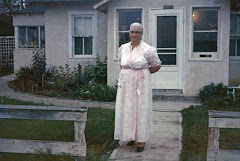
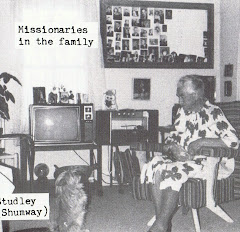
The years passed and grandmother married and had 6 children living in Frankfort on a big farm. Martin Calvin was doing some investigating at the lower field and wanted Louisa to walk around the field with him. There were Indians camped at the lower end of the field. Calvin said Louisa lets walk over and see if we know any of them so they did.

When they got to the camp, an old Indian came forward and said, "Sockobee, Sockobee."
Grandmother didn't know what he was trying to say or recognize him. Then he held up his two scared hands and she knew he was one of the Indians she helped to care for many years before when she was a small girl, 10 years of age."

Grandmother Delilah Asay told us this story, telling abou the Indian braves that escaped the soldiers hid under the banks of the frozen river and the snow being red with blood. Rick, has many Northern Shoshone friends, and tried to discover what Sokopee meant. Since it is phonetic, the closest translation that makes sense is "Little mother". In any case, this Indian used it as a term of endearment.


(click below to hear Amazing Grace in Cherokee)